
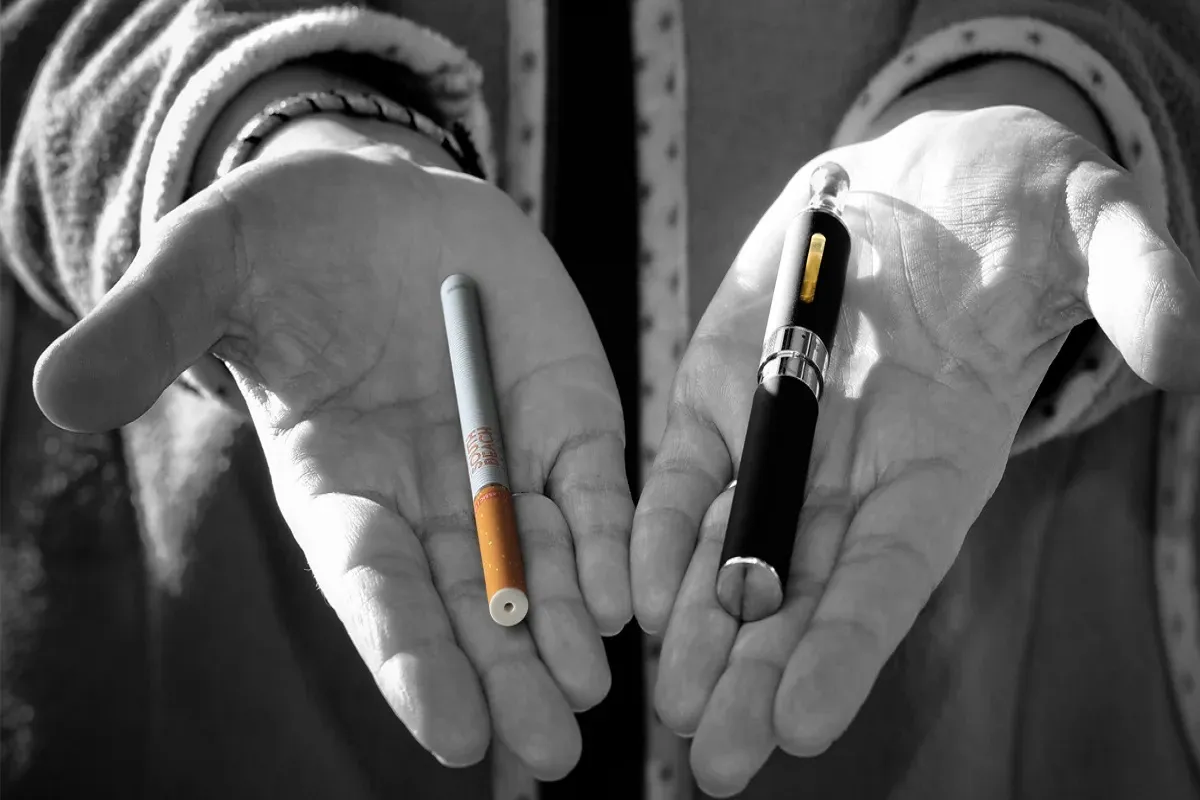
More adults in Kenya are switching from cigarettes to vaping every year. The reasons are practical: cost, smell, convenience and the range of nicotine strengths available. This article sets out the differences between the two so you can decide for yourself whether the switch makes sense.
How the two work
A cigarette burns tobacco at around 600 to 900 degrees Celsius, producing smoke that contains tar, carbon monoxide and thousands of chemical byproducts of combustion. A vape device heats e-liquid to roughly 200 degrees Celsius, producing an aerosol (commonly called vapour) that contains nicotine, propylene glycol, vegetable glycerine and flavouring. There is no combustion, no tobacco leaf, no ash and no smoke.
Cost in Kenya
A pack-a-day cigarette habit in Nairobi costs in the region of KSh 500 to KSh 700 per day depending on the brand. Over a month, that is KSh 15,000 to KSh 21,000.
A refillable pod kit like the Caliburn A3 costs KSh 4,000 upfront. A 30ml bottle of nicotine salt costs around KSh 2,000 and lasts most users two to three weeks. Replacement pods add roughly KSh 500 every week or two. Monthly running cost after the initial purchase: roughly KSh 4,000 to KSh 6,000. The difference adds up to tens of thousands of shillings over a year.
Disposable vapes sit somewhere in between. A sealed disposable costs KSh 2,500 to KSh 4,500 and lasts anywhere from a few days to a couple of weeks depending on usage. For a heavy user, refillable hardware is significantly cheaper over time.
Smell and social impact
Cigarette smoke clings to clothes, hair, furniture and car interiors. The smell is persistent and widely disliked. Vape aerosol dissipates within seconds and leaves little to no residual odour. For many adults in Kenya, this alone is the deciding factor, particularly for those who live with non-smokers or work in shared spaces.
Nicotine control
A cigarette delivers a fixed amount of nicotine per stick. You cannot adjust it. E-liquid comes in a range of strengths, typically from zero milligrams up to fifty milligrams in salt form. This means a vaper can start at the strength that matches their cigarette intake and reduce over time if they choose to. The freebase vs nicotine salts guide explains the two nicotine formats and which suits which device.
Flavour range
Cigarettes come in a small number of flavour profiles: regular tobacco, menthol and a few variations. Vaping opens up hundreds of flavours across fruit, dessert, candy, menthol, beverage and tobacco categories. For many switchers, flavour variety is what prevents them from going back. The top vape flavours in Kenya article covers the most popular choices.
What you need to make the switch
If you are a current smoker considering vaping for the first time, the entry point is simple:
- A mouth-to-lung (MTL) pod kit. MTL devices draw like a cigarette, which makes the transition natural. The pod kits section of the Vapesoko range is where most switchers start.
- A nicotine salt e-liquid at 20mg or 35mg. Salts deliver nicotine smoothly in a small device. Most pack-a-day smokers find 20mg satisfying; heavier smokers may prefer 35mg initially.
- Nothing else. No tanks, no coil building, no wattage settings. A pod kit is fill-and-go.
The beginner's guide to vaping in Kenya walks through the entire process step by step, from unboxing to the first puff.
What vaping does not do
Vaping is not a medical product, and Vapesoko does not sell it as one. It is not prescribed, it is not a therapy, and it is not approved by any Kenyan authority for any purpose. Adults who switch do so for their own reasons, and this article presents the practical differences rather than medical advice. If you have questions about nicotine use and your health, speak to a doctor.
Vapesoko Nairobi delivers across Kenya: same day inside Nairobi, and 1 to 2 business days to the rest of the country by courier. Payment is by M-Pesa or cash on delivery.